If you are desperately searching for how to get rid of belly fat, you have just found the most comprehensive, science-backed guide available in 2026.
Here is the brutal truth: belly fat is the most stubborn, most dangerous, and most misunderstood type of fat on the human body. Millions of people do hundreds of crunches, follow crash diets, and buy expensive supplements — only to see their belly fat remain stubbornly unchanged.
Why? Because they are fighting belly fat with the wrong strategies.
According to the National Institutes of Health, excess abdominal fat affects over 50% of adults in developed countries and is directly linked to:
- ❗ Type 2 diabetes
- ❗ Heart disease
- ❗ Stroke
- ❗ Certain cancers
- ❗ Sleep apnea
- ❗ High blood pressure
The good news? Science now understands belly fat better than ever before in 2026. We know exactly what causes it, what drives it, and most importantly — what actually eliminates it.
This guide covers everything you need to know:
- ✅ The science of belly fat and why it is so stubborn
- ✅ The most effective diet strategies proven by research
- ✅ The exact exercises that target abdominal fat
- ✅ The sleep and stress connection most people ignore
- ✅ The best natural supplements that genuinely help
- ✅ A complete step-by-step action plan to start today
Let’s get into it.
What is Belly Fat and Why is it Dangerous?
Before learning how to get rid of belly fat, it is critical to understand exactly what you are dealing with.
Belly fat — also called abdominal fat or central adiposity — refers to excess fat stored around the abdominal region. But unlike the fat on your arms or legs, belly fat is metabolically active tissue. This means it does not just sit there passively — it actively produces hormones, inflammatory compounds, and chemicals that directly damage your health.
Why Belly Fat is More Dangerous Than Other Body Fat
Research published in the Journal of the American College of Cardiology confirms that people with excess belly fat face significantly higher risks of serious health conditions — even when their overall body weight is normal. This phenomenon is called TOFI: Thin Outside, Fat Inside.
Here is why belly fat is so uniquely dangerous:
1. It Produces Inflammatory Chemicals
Visceral belly fat continuously releases inflammatory cytokines — chemical signals that create chronic, low-grade inflammation throughout the body. This inflammation damages blood vessels, organs, and cellular DNA over time.
2. It Disrupts Hormonal Balance
Abdominal fat cells produce excess estrogen, cortisol, and resistin — hormones that disrupt metabolism, increase hunger, promote further fat storage, and reduce insulin sensitivity.
3. It Surrounds Vital Organs
Unlike surface fat, visceral belly fat wraps around your liver, pancreas, intestines, and heart — directly impairing their function and increasing the risk of organ disease.
4. It Creates a Vicious Fat Storage Cycle
Belly fat produces hormones that literally signal your body to store more fat in the belly — creating a self-reinforcing cycle that makes abdominal fat increasingly difficult to lose without the right strategies.
Types of Belly Fat
Understanding the two distinct types of belly fat is essential because they respond differently to interventions:
Type 1: Subcutaneous Fat
What it is: The soft, pinchable fat that sits directly beneath the skin of your abdomen. This is the “love handles” and “muffin top” fat you can physically grab.
Characteristics:
- Visible as soft, jiggly tissue under the skin
- Can be pinched between fingers
- Less metabolically dangerous than visceral fat
- Responds well to diet and exercise over time
- Takes longer to lose than visceral fat
Health Risk Level: ⚠️ Moderate
Type 2: Visceral Fat
What it is: The deep, dangerous fat that surrounds your internal organs — liver, pancreas, intestines, and kidneys. You cannot see or feel visceral fat — but it is the most damaging type.
Characteristics:
- Located deep inside the abdominal cavity
- Cannot be pinched — it is beneath the abdominal muscles
- Highly metabolically active
- Produces inflammatory hormones continuously
- Responds relatively quickly to diet and exercise changes
- The primary driver of metabolic disease
Health Risk Level: 🚨 HIGH — Most dangerous type of body fat
Type 3: Intramuscular Fat
What it is: Small deposits of fat stored within the muscle tissue itself — less discussed but increasingly linked to insulin resistance.
Health Risk Level: ⚠️ Moderate-High for metabolic health
Key Difference at a Glance
| Feature | Subcutaneous Fat | Visceral Fat |
|---|---|---|
| Location | Under skin | Around organs |
| Visibility | Visible, pinchable | Invisible |
| Health Risk | Moderate | Very High |
| Responds to | Diet + Exercise (slowly) | Diet + Exercise (faster) |
| Measurement | Skinfold caliper | Waist circumference / MRI |
| Primary Driver | Caloric excess | Cortisol, insulin, inflammation |
Key Insight: The strategies in this guide target both types — but particularly visceral fat, which provides the greatest health benefit when reduced.
What Causes Belly Fat?
Understanding the root causes of belly fat allows you to address the problem at its source rather than fighting symptoms. Here are the primary drivers:
1. Caloric Surplus
The most fundamental cause. When you consistently consume more calories than you burn, the excess is stored as fat — and the body preferentially stores it around the abdomen, particularly in hormonally disrupted individuals.
2. Chronically Elevated Cortisol (Stress)
This is the most underestimated cause of belly fat in 2026. Cortisol — your body’s primary stress hormone — specifically signals fat cells in the abdominal region to store more fat. Chronic stress = chronic cortisol = relentless belly fat accumulation regardless of diet.
3. Poor Sleep Quality
Research from the University of Chicago found that sleeping only 5.5 hours per night causes the body to store significantly more fat in the abdominal region compared to sleeping 8.5 hours — even on identical diets.
4. Insulin Resistance
When cells stop responding properly to insulin, blood sugar remains elevated, and the body stores excess glucose as abdominal fat. Insulin resistance and belly fat form a devastating self-reinforcing cycle.
5. Hormonal Imbalances
- Menopause in women causes estrogen decline, triggering fat redistribution to the abdomen
- Low testosterone in men promotes belly fat storage over muscle building
- Thyroid dysfunction slows metabolism, promoting overall and abdominal fat gain
6. Poor Dietary Choices
- Excessive refined sugar and fructose (particularly from sugary drinks)
- High intake of trans fats and ultra-processed foods
- Excessive alcohol — particularly beer (“beer belly” is metabolically real)
- Low protein intake reducing satiety and metabolic rate
7. Physical Inactivity
A sedentary lifestyle dramatically reduces metabolic rate and allows visceral fat to accumulate unchecked. Even light daily movement makes a measurable difference.
8. Gut Microbiome Imbalance
Emerging 2026 research increasingly links dysbiotic gut bacteria to abdominal fat accumulation through effects on inflammation, insulin signaling, and fat storage hormones.
9. Genetics
Genetic factors influence where your body tends to store fat. Some people are genetically predisposed to store excess calories abdominally. However, genetics is not destiny — the right lifestyle changes overcome genetic predispositions effectively.
10. Age-Related Metabolic Slowdown
Metabolic rate naturally declines with age — approximately 2-3% per decade after age 25. Combined with age-related hormonal changes, this promotes progressive belly fat accumulation without corresponding lifestyle adjustments.
How to Measure Your Belly Fat
Before starting any belly fat reduction program, establish your baseline measurements:
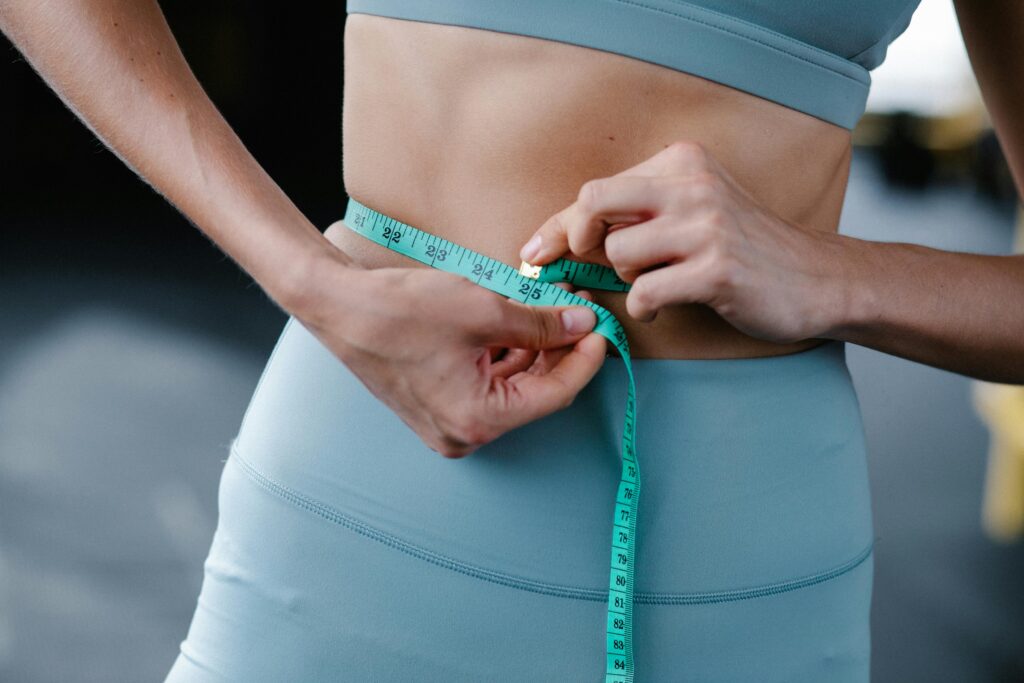
Method 1: Waist Circumference (Most Practical)
How to measure:
- Stand upright and exhale naturally
- Place a tape measure around your waist at the level of your navel
- Ensure the tape is snug but not compressing the skin
- Record the measurement in inches or centimeters
Healthy Waist Circumference Thresholds:
| Group | Low Risk | Increased Risk | High Risk |
|---|---|---|---|
| Men | Under 37 inches (94cm) | 37-40 inches (94-102cm) | Over 40 inches (102cm) |
| Women | Under 31.5 inches (80cm) | 31.5-35 inches (80-88cm) | Over 35 inches (88cm) |
Method 2: Waist-to-Hip Ratio (WHR)
How to calculate:
- Measure waist circumference (at navel)
- Measure hip circumference (at widest point)
- Divide waist by hip measurement
Healthy WHR Thresholds:
| Group | Healthy | At Risk |
|---|---|---|
| Men | Under 0.90 | Over 0.90 |
| Women | Under 0.85 | Over 0.85 |
Method 3: Waist-to-Height Ratio (WHtR)
Simply divide your waist circumference by your height — both in the same unit.
Healthy threshold: Under 0.5 for both men and women
Pro Tip: Track all three measurements monthly. Progress photos taken from the same angle in identical lighting provide the most motivating visual evidence of belly fat reduction.
Best Diet to Get Rid of Belly Fat
Diet is the single most powerful tool for getting rid of belly fat. No amount of exercise can outrun a poor diet — but the right nutritional approach can transform your abdominal fat even with minimal exercise.
The Most Effective Dietary Approach for Belly Fat (2026)
Based on the latest research, the Mediterranean-style, high-protein, low-refined-carbohydrate diet produces the most consistent and fastest belly fat reduction:
Principle #1: Create a Moderate Calorie Deficit
The non-negotiable foundation. To lose belly fat, you must consume fewer calories than you burn — but the deficit must be sustainable.
- Recommended deficit: 300-500 calories below your Total Daily Energy Expenditure (TDEE)
- Avoid extreme restriction: Deficits over 1,000 calories increase cortisol, break down muscle, and promote rebound weight gain
- Use a TDEE calculator to find your personal target
Principle #2: Prioritize Protein Above Everything
Protein is the most powerful macronutrient for belly fat loss because:
- Burns up to 30% of its own calories through the thermic effect of food
- Dramatically reduces appetite and hunger hormones
- Preserves lean muscle mass during fat loss
- Boosts metabolism through increased muscle retention
Target: 0.8-1.2 grams of protein per pound of body weight daily
Best protein sources:
- 🥚 Eggs (complete protein, most bioavailable)
- 🐔 Chicken breast (lean, high protein)
- 🐟 Salmon (protein + omega-3 anti-inflammatory fats)
- 🫘 Legumes (beans, lentils — protein + fiber)
- 🥩 Lean beef (protein + zinc + B12)
- 🧀 Greek yogurt (protein + probiotics)
- 🌿 Tofu and tempeh (complete plant protein)
Principle #3: Drastically Reduce Refined Sugar and Fructose
Research published in the Journal of Clinical Investigation found that people consuming high-fructose diets gained significantly more visceral belly fat than those consuming the same calories from glucose.
Priority sugar reductions:
- ❌ Eliminate sugary beverages (soda, juice, energy drinks, flavored coffee)
- ❌ Remove candy, pastries, and processed sweets
- ❌ Avoid hidden sugars in sauces, condiments, and “health” foods
- ❌ Limit alcohol — particularly beer and sweet cocktails
Principle #4: Embrace Healthy Fats
Contrary to outdated advice, healthy fats do NOT cause belly fat. They actually help eliminate it by:
- Reducing inflammation that drives visceral fat storage
- Improving insulin sensitivity
- Increasing satiety and reducing total caloric intake
Best healthy fats for belly fat loss:
- 🥑 Avocado (monounsaturated fat + fiber)
- 🫒 Olive oil (oleocanthal anti-inflammatory compound)
- 🐟 Fatty fish (omega-3 EPA and DHA)
- 🥜 Nuts and seeds (mixed healthy fats + protein)
- 🥥 Coconut oil (MCTs for quick energy)
Principle #5: Increase Fiber Intake Dramatically
Soluble fiber is particularly powerful for belly fat reduction. Research in the journal Obesity found that every 10-gram increase in daily soluble fiber was associated with a 3.7% reduction in visceral belly fat over 5 years — independent of other dietary changes.
Best fiber sources for belly fat:
- Oats (beta-glucan soluble fiber)
- Flaxseeds (soluble fiber + lignans)
- Brussels sprouts and broccoli
- Avocados (soluble + insoluble fiber)
- Legumes (beans, lentils, chickpeas)
- Chia seeds (exceptional soluble fiber content)
- Berries (fiber + antioxidants)
Principle #6: Choose Complex Carbohydrates Only
Not all carbohydrates are equal. Refined carbs spike blood sugar and insulin — promoting belly fat storage. Complex carbs provide sustained energy without the insulin spike.
| ✅ Eat These | ❌ Avoid These |
|---|---|
| Brown rice | White rice |
| Quinoa | White bread |
| Sweet potatoes | Regular pasta |
| Oats | Breakfast cereals |
| Whole grain bread | Crackers and chips |
| Lentils | Bagels and muffins |
The Anti-Belly Fat Meal Plan (Sample Day)
| Meal | Food | Why |
|---|---|---|
| Breakfast | 3 scrambled eggs + spinach + avocado + green tea | High protein, healthy fat, antioxidants |
| Mid-Morning | Apple + 20 almonds | Fiber + healthy fat + sustained energy |
| Lunch | Grilled salmon + quinoa + large mixed salad + olive oil | Omega-3s, complete protein, fiber |
| Afternoon | Greek yogurt + mixed berries + chia seeds | Protein + probiotics + antioxidants |
| Dinner | Chicken breast + roasted vegetables + brown rice | Lean protein + complex carbs + fiber |
| Evening | Herbal tea + small handful of walnuts | Anti-inflammatory + healthy fat |
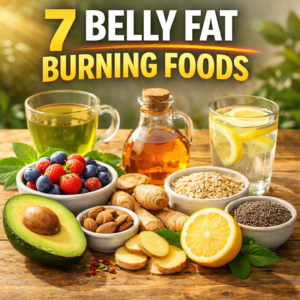
Foods That Burn Belly Fat
These scientifically proven fat-burning foods should feature prominently in your daily diet:
🥦 1. Cruciferous Vegetables (Broccoli, Cauliflower, Brussels Sprouts)
Rich in indole-3-carbinol that helps balance estrogen — a key driver of belly fat in both men and women. High fiber content keeps you full for hours.
🫐 2. Berries (Blueberries, Raspberries, Strawberries)
Packed with anthocyanins that reduce inflammation and improve insulin sensitivity. Low calorie density means you can eat significant volumes without caloric consequence.
🍵 3. Green Tea
Contains EGCG — one of the most studied thermogenic compounds in nutrition science. Research confirms green tea extract can increase fat burning by 4-8% daily and specifically targets abdominal fat.
🥚 4. Eggs
The most satiating breakfast food studied. Research shows eating eggs for breakfast reduces caloric intake for the subsequent 24-36 hours compared to carbohydrate-based breakfasts.
🐟 5. Fatty Fish (Salmon, Mackerel, Sardines)
Omega-3 fatty acids dramatically reduce inflammation — the primary driver of visceral fat accumulation. Studies show omega-3 supplementation significantly reduces visceral fat in overweight individuals.
🍋 6. Apple Cider Vinegar
A Japanese study found ACV consumption led to measurably reduced belly fat, waist circumference, and triglycerides over 12 weeks — even without other dietary changes.
🌶️ 7. Cayenne Pepper
Capsaicin activates thermogenesis and has been shown to specifically promote visceral fat oxidation after meals. Adding cayenne to meals is a simple, free belly fat strategy.
🥑 8. Avocados
A 2021 study published in the Journal of Nutrition found that women who consumed avocado daily had significantly greater reductions in visceral belly fat compared to the control group.
🧄 9. Garlic
Contains allicin — a compound shown to prevent the development of adipose (fat) cells and reduce abdominal fat accumulation in multiple animal and preliminary human studies.
☕ 10. Black Coffee
Caffeine is one of the most evidence-backed natural metabolism boosters available. Black coffee boosts metabolic rate by 3-11% and specifically promotes fat mobilization from fat cells.
Foods That Cause Belly Fat
Eliminate these belly-fat-promoting foods from your diet immediately:
❌ 1. Sugary Beverages (The #1 Worst Offender)
Liquid calories bypass normal satiety signals entirely. A single large soda contains 65g of sugar — the equivalent of 16 teaspoons. Liquid fructose goes directly to the liver for fat conversion, preferentially stored as visceral belly fat.
Eliminate: Soda, fruit juice, energy drinks, sweetened coffee, sports drinks, sweetened tea
❌ 2. Trans Fats and Hydrogenated Oils
Research involving 6-year studies on monkeys found that those fed trans fat diets gained 33% more abdominal fat than those fed healthy fat diets on identical calories. Trans fats are hidden in many processed and fast foods.
Eliminate: Margarine, vegetable shortening, commercially fried foods, many packaged snacks
❌ 3. Alcohol (Especially Beer)
Alcohol is metabolized as a priority fuel — causing your body to store ALL other consumed foods as fat during the metabolic processing period. Beer contains both alcohol AND rapidly absorbed carbohydrates — a uniquely belly-fat-promoting combination.
Limit: Maximum 1 drink per day for women, 2 for men during active belly fat reduction
❌ 4. Refined Grain Products
White bread, white rice, regular pasta, and most breakfast cereals spike blood sugar and insulin dramatically — signaling your body to store belly fat within minutes of consumption.
❌ 5. Ultra-Processed Snack Foods
Chips, crackers, cookies, and commercial snack foods combine refined carbohydrates, inflammatory seed oils, excess sodium, and artificial flavor enhancers that override satiety signals and promote overconsumption.
❌ 6. Artificial Sweeteners
Counterintuitively, research increasingly suggests that artificial sweeteners may disrupt gut bacteria in ways that promote insulin resistance and abdominal fat storage — despite containing no calories.
❌ 7. High-Fructose Corn Syrup (HFCS)
The most dangerous form of refined sugar for belly fat. HFCS is metabolized almost exclusively by the liver, where it is converted to fat with extraordinary efficiency — making it the most potent dietary driver of visceral fat accumulation known.
Best Exercises to Lose Belly Fat

Alt Text: Best exercises to get rid of belly fat 2026 – person doing core workout plank and HIIT training
Source: Pexels – Free for commercial use
Here is a critical truth that most fitness content gets wrong: you cannot spot-reduce belly fat with crunches alone. Sit-ups and abdominal exercises build the muscles beneath the fat — but they do not preferentially burn abdominal fat.
True belly fat loss requires a combination of:
- Cardiovascular exercise (burns overall calories)
- HIIT training (specifically targets visceral fat)
- Strength training (builds metabolism-boosting muscle)
- Core work (strengthens and tones once fat is reduced)
The Most Effective Exercises for Belly Fat (Ranked by Evidence)
🏆 Tier 1: Highest Belly Fat Burning Exercises
1. High-Intensity Interval Training (HIIT)
HIIT is the single most evidence-backed exercise modality for specifically targeting visceral belly fat. A landmark meta-analysis of 39 studies found HIIT was 28.5% more effective at reducing visceral fat than moderate-intensity continuous exercise.
Why HIIT works: Creates an “afterburn effect” (EPOC) — your body continues burning calories at elevated rates for 24-48 hours post-workout. It also triggers a massive hormonal response that specifically mobilizes visceral fat stores.
Sample Beginner HIIT Workout (20 minutes):
| Exercise | Work | Rest | Rounds |
|---|---|---|---|
| Jump squats | 30 seconds | 30 seconds | 4 |
| Mountain climbers | 30 seconds | 30 seconds | 4 |
| Burpees | 30 seconds | 30 seconds | 4 |
| High knees | 30 seconds | 30 seconds | 4 |
| Push-ups | 30 seconds | 30 seconds | 4 |
Frequency: 3-4 sessions per week with at least 48 hours rest between sessions
2. Walking (The Most Underrated Belly Fat Exercise)
Walking may be the most underestimated belly fat exercise in existence. A 2014 study published in the Journal of Exercise Nutrition & Biochemistry found that obese women who walked 50-70 minutes, 3 times per week for 12 weeks experienced significant reductions in both subcutaneous AND visceral belly fat.
Why walking works: It primarily uses fat as fuel (unlike high-intensity exercise that burns glycogen). It reduces cortisol. And it is sustainable long-term.
Target: 8,000-10,000 steps per day — or 30-45 minutes of brisk walking daily
Pro Tip: Walk immediately after meals for dramatically enhanced blood sugar control and fat burning.
3. Swimming
Swimming is a full-body, low-impact exercise that burns significant calories while being gentle on joints. Research shows swimming is particularly effective for visceral fat reduction and is ideal for overweight individuals or those with joint issues.
Target: 30-45 minutes, 3-4 times per week
🥈 Tier 2: Highly Effective Belly Fat Exercises
4. Cycling (Outdoor or Stationary)
Cycling at moderate-to-high intensity burns substantial calories and has strong evidence for visceral fat reduction. The combination of cardiovascular output and lower body muscle engagement makes it exceptionally efficient.
5. Rowing Machine
Often overlooked, rowing engages 86% of the body’s muscles — creating massive caloric burn and a powerful metabolic response that promotes belly fat loss.
6. Jump Rope
One of the highest calorie-burning exercises per minute available. 10 minutes of jump rope equals approximately 30 minutes of jogging in terms of caloric expenditure and cardiovascular intensity.
🥉 Tier 3: Strength Training (Essential for Long-Term Belly Fat Loss)
Strength training does not burn as many calories during the session as cardio — but it builds metabolically active muscle tissue that burns additional calories 24 hours a day, 7 days a week.
Research from Harvard School of Public Health found that men who did 20 minutes of daily weight training gained less abdominal fat over 12 years than men who did 20 minutes of daily cardiovascular exercise.
The most effective compound strength exercises for belly fat:
| Exercise | Primary Muscles | Belly Fat Benefit |
|---|---|---|
| Deadlifts | Full body | Highest testosterone and growth hormone response |
| Squats | Legs, core, glutes | Maximum metabolic disruption |
| Barbell rows | Back, biceps, core | Full posterior chain activation |
| Bench press | Chest, triceps, shoulders | Major muscle group activation |
| Overhead press | Shoulders, core, triceps | Core stabilization required |
| Pull-ups/Chin-ups | Back, biceps, core | Intense full upper body engagement |
Recommended strength training: 3 sessions per week, 45-60 minutes each
Core Exercises (Best for Toning After Fat Loss)
These exercises strengthen and tone abdominal muscles — they become visible as belly fat is reduced through diet and cardio:
Best Core Exercises:
| Exercise | Duration/Reps | Difficulty |
|---|---|---|
| Plank | 30-60 seconds x 3 | Beginner |
| Dead Bug | 10 reps each side x 3 | Beginner |
| Bicycle Crunches | 20 reps x 3 | Intermediate |
| Russian Twists | 20 reps x 3 | Intermediate |
| Hanging Leg Raises | 10-15 reps x 3 | Advanced |
| Ab Wheel Rollouts | 10 reps x 3 | Advanced |
| Dragon Flag | 5-8 reps x 3 | Expert |
📅 Optimal Weekly Exercise Schedule for Belly Fat Loss
| Day | Exercise | Duration |
|---|---|---|
| Monday | HIIT Training | 20-25 minutes |
| Tuesday | Strength Training (Upper Body) | 45-60 minutes |
| Wednesday | Brisk Walking + Core Work | 45 minutes + 15 minutes |
| Thursday | HIIT Training | 20-25 minutes |
| Friday | Strength Training (Lower Body) | 45-60 minutes |
| Saturday | Long Walk / Swimming / Cycling | 45-60 minutes |
| Sunday | Active Recovery (Yoga / Light Walking) | 30 minutes |
HIIT Training for Belly Fat
HIIT deserves its own section because it is the most scientifically validated exercise for visceral belly fat reduction in 2026.
Why HIIT Specifically Targets Belly Fat
Research published in the International Journal of Obesity found that HIIT training selectively mobilizes visceral adipose tissue (VAT) more than any other exercise modality. Here is the physiological mechanism:
- Catecholamine Release: HIIT triggers massive releases of epinephrine and norepinephrine — hormones that specifically unlock fat cells for energy use
- Growth Hormone Surge: Intense intervals trigger growth hormone release — the most powerful natural fat-burning hormone in the body
- EPOC Effect: Post-HIIT oxygen consumption remains elevated for 14-48 hours, burning additional fat throughout recovery
- Insulin Sensitivity Improvement: Even a single HIIT session improves insulin sensitivity for up to 48 hours — directly reducing belly fat storage signals
3 Evidence-Based HIIT Protocols for Belly Fat
Protocol 1: Tabata (Most Intense — 4 Minutes)
- 20 seconds maximum effort
- 10 seconds complete rest
- Repeat 8 rounds (4 minutes total)
- Choose: Burpees, squat jumps, or mountain climbers
Protocol 2: 30:30 Intervals (Beginner Friendly — 20 Minutes)
- 30 seconds moderate-high effort
- 30 seconds complete rest
- Repeat for 20 minutes
- Choose: Cycling, running, rowing, or bodyweight exercises
Protocol 3: Sprint Intervals (Advanced — 15 Minutes)
- 10-second maximum sprint
- 50 seconds slow walk recovery
- Repeat 10 rounds
- Perform outdoors or on treadmill/stationary bike
Strength Training for Belly Fat
The Muscle-Metabolism Connection
Every pound of muscle you build burns an additional 6-10 calories per day at rest — compared to just 2 calories for a pound of fat. This metabolic advantage compounds dramatically over time.
A person who builds 10 pounds of muscle increases their resting metabolic rate by approximately 60-100 additional calories burned per day — creating ongoing belly fat loss around the clock without additional effort.
The Hormonal Benefits of Lifting Weights
Heavy compound strength training triggers powerful hormonal responses:
- Testosterone increase: Promotes fat burning and muscle building simultaneously
- Growth hormone surge: The most powerful natural fat-burning hormone
- IGF-1 elevation: Supports lean body composition maintenance
- Insulin sensitivity improvement: Reduces belly fat storage signals for 48+ hours
How Sleep Affects Belly Fat

Alt Text: How sleep and stress management help get rid of belly fat 2026 – person sleeping peacefully for cortisol reduction
Source: Pexels – Free for commercial use
If you are doing everything right with diet and exercise but still struggling with belly fat — poor sleep may be the hidden culprit.
The Sleep-Belly Fat Research
A landmark study from the University of Chicago demonstrated that when dieters slept 5.5 hours vs. 8.5 hours nightly on identical diets:
- Reduced sleep group lost 55% LESS fat
- The reduced sleep group lost 60% MORE lean muscle
- Hunger hormones (ghrelin) increased by 25% in poor sleepers
- Cortisol levels were significantly elevated in poor sleepers
How Poor Sleep Causes Belly Fat
1. Ghrelin Spike (Hunger Hormone)
Sleep deprivation causes a dramatic spike in ghrelin — the “hunger hormone” — increasing appetite by up to 25% and specifically increasing cravings for high-calorie, high-sugar foods.
2. Leptin Crash (Satiety Hormone)
Simultaneously, sleep deprivation suppresses leptin — the “fullness hormone” — meaning you eat more and feel less satisfied from every meal.
3. Cortisol Elevation
Poor sleep is one of the most powerful triggers of cortisol elevation — directly promoting visceral belly fat storage. Chronically elevated cortisol from poor sleep creates a seemingly unstoppable cycle of belly fat accumulation.
4. Insulin Resistance Development
Even ONE night of poor sleep measurably reduces insulin sensitivity — meaning more blood glucose is converted to belly fat rather than being used for energy.
How to Optimize Sleep for Belly Fat Loss
✅ Target 7-9 hours of quality sleep every night
Sleep optimization strategies:
- 🌙 Same bedtime every night — even weekends (circadian rhythm consistency)
- 📵 No screens 60 minutes before bed — blue light suppresses melatonin
- 🌡️ Keep bedroom temperature between 65-68°F (18-20°C) — optimal for deep sleep
- ☕ No caffeine after 2pm — caffeine has an 8-10 hour half-life
- 🍷 Avoid alcohol within 3 hours of bed — alcohol dramatically disrupts sleep quality
- 🧘 Pre-sleep relaxation ritual: meditation, reading, gentle stretching
- 🌑 Complete darkness — use blackout curtains
- 📿 Consider magnesium glycinate — proven to improve sleep quality naturally
Stress and Cortisol – The Hidden Belly Fat Driver
Stress is arguably the most overlooked driver of stubborn belly fat in the modern world — and eliminating it is one of the most powerful things you can do for your waistline.
The Cortisol-Belly Fat Connection
When you experience stress — physical, psychological, or emotional — your adrenal glands release cortisol as part of the fight-or-flight stress response. In short bursts, cortisol is life-saving. In chronic excess, it is devastating.
Here is what chronically elevated cortisol does to your belly:
- Directly signals fat cells in the abdominal region to store more fat
- Increases appetite — particularly for high-calorie “comfort foods”
- Promotes insulin resistance — rerouting blood glucose into fat storage
- Breaks down muscle tissue — reducing metabolic rate
- Increases inflammation — promoting visceral fat accumulation
- Disrupts sleep — creating a stress-poor sleep-belly fat vicious cycle
Proven Stress Reduction Techniques for Belly Fat
1. Meditation (Most Evidence-Based)
Research published in the Journal of Obesity found that mindfulness meditation significantly reduced cortisol levels AND abdominal fat in overweight adults — independent of dietary changes. Even 10 minutes daily produces measurable cortisol reduction.
2. Yoga
Combines physical activity with mindfulness and breathing — creating a triple stress-reduction effect. Studies show regular yoga practice reduces cortisol levels by 10-25% on average.
3. Deep Breathing (Box Breathing)
Activates the parasympathetic nervous system — directly counteracting the cortisol stress response. Practice: inhale 4 counts, hold 4 counts, exhale 4 counts, hold 4 counts. Just 5 minutes daily produces measurable cortisol reduction.
4. Nature Exposure
Japanese research on “Shinrin-yoku” (forest bathing) shows that spending even 20-30 minutes in natural environments measurably reduces cortisol, blood pressure, and inflammatory markers.
5. Social Connection
Research consistently shows that strong social connections buffer the physiological stress response — reducing cortisol levels and belly fat accumulation in chronically stressed individuals.
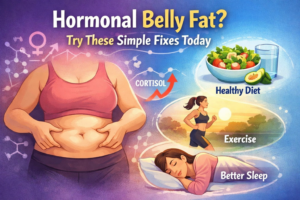
Hormonal Belly Fat
Hormonal imbalances deserve special attention because they create belly fat that responds poorly to standard diet and exercise interventions.
Belly Fat in Women
Perimenopause and Menopause
As estrogen declines during menopause, fat distribution shifts from the hips and thighs (typical female pattern) to the abdomen. This transition typically begins in the mid-40s and accelerates through menopause.
Strategies for hormonal belly fat in women:
- ✅ Prioritize strength training to maintain muscle mass and metabolism
- ✅ Consider phytoestrogen-rich foods (flaxseeds, soy, legumes)
- ✅ Discuss bioidentical hormone replacement therapy with your doctor
- ✅ Prioritize sleep — particularly important during hormonal transitions
- ✅ Reduce alcohol — which amplifies estrogen imbalances
Polycystic Ovary Syndrome (PCOS)
PCOS involves insulin resistance and elevated androgens — directly promoting abdominal fat storage. Low-glycemic diets, inositol supplementation, and resistance training are particularly effective.
Belly Fat in Men
Low Testosterone
Testosterone naturally declines approximately 1-2% per year after age 30. Low testosterone directly promotes belly fat storage while reducing muscle mass — creating a progressive metabolic decline.
Strategies for hormonal belly fat in men:
- ✅ Heavy compound strength training (most powerful natural testosterone booster)
- ✅ Prioritize sleep (70% of testosterone production occurs during sleep)
- ✅ Reduce alcohol (testosterone suppressor)
- ✅ Manage stress (cortisol suppresses testosterone production)
- ✅ Optimize zinc and vitamin D levels (essential for testosterone production)
- ✅ Discuss TRT (testosterone replacement therapy) with a physician if clinically low
Best Natural Supplements for Belly Fat

Alt Text: Best natural supplements to get rid of belly fat 2026 – supplement bottles with natural herbs and green tea
Source: Unsplash – Free for commercial use
While diet and exercise are the foundation of belly fat loss, certain evidence-based natural supplements can meaningfully accelerate results when combined with lifestyle changes:
🥇 1. Berberine (Most Powerful Natural Belly Fat Supplement)
- How it works: Activates AMPK enzyme — the “metabolic master switch” — improving insulin sensitivity and dramatically reducing visceral fat storage
- Clinical evidence: Multiple studies show berberine reduces fasting blood sugar by 20% and visceral belly fat significantly
- Recommended dose: 500mg, 2-3 times daily with meals
- Best for: People with insulin resistance, blood sugar issues, metabolic syndrome
🥈 2. Green Tea Extract (EGCG)
- How it works: Increases thermogenesis, enhances fat oxidation, and specifically targets abdominal fat
- Clinical evidence: Meta-analysis of 11 studies confirms significant reductions in body weight and waist circumference
- Recommended dose: 400-600mg EGCG daily
- Best for: Everyone — particularly effective for subcutaneous belly fat
🥉 3. Glucomannan Fiber
- How it works: Expands in stomach creating powerful satiety, slows glucose absorption preventing insulin spikes
- Clinical evidence: EFSA-approved health claim for weight management
- Recommended dose: 3-5g daily, 30 minutes before meals with large glass of water
- Best for: Appetite control and blood sugar stabilization
4. Ashwagandha
- How it works: Reduces cortisol levels by up to 30%, directly addressing stress-driven belly fat
- Clinical evidence: Double-blind studies confirm significant cortisol reduction and weight loss in stressed adults
- Recommended dose: 300-600mg standardized to 5% withanolides daily
- Best for: Stress-related belly fat, emotional eating, elevated cortisol
5. Omega-3 Fish Oil
- How it works: Reduces inflammation that drives visceral fat accumulation, improves insulin sensitivity
- Clinical evidence: Studies show omega-3 supplementation significantly reduces visceral fat in overweight individuals
- Recommended dose: 2-4g EPA+DHA daily
- Best for: Inflammatory belly fat, metabolic syndrome, heart health
6. Probiotics (Lactobacillus Gasseri)
- How it works: Modulates gut microbiome to reduce inflammation, improve metabolism, and specifically reduce abdominal fat
- Clinical evidence: L. Gasseri specifically shown to reduce belly fat by 8.5% over 12 weeks
- Recommended dose: 100 billion CFU minimum
- Best for: Gut dysbiosis-related belly fat, bloating, digestive issues
7. Magnesium Glycinate
- How it works: Improves insulin sensitivity, reduces cortisol, dramatically enhances sleep quality
- Clinical evidence: Magnesium deficiency — present in over 50% of adults — is linked to increased insulin resistance and belly fat
- Recommended dose: 300-400mg before bed
- Best for: Poor sleep, high stress, insulin resistance
8. Vitamin D3
- How it works: Vitamin D deficiency is strongly associated with abdominal obesity. Supplementation improves insulin sensitivity and supports testosterone production in men
- Clinical evidence: Inverse relationship between vitamin D levels and visceral fat consistently shown in population studies
- Recommended dose: 2,000-5,000 IU daily with Vitamin K2 (100mcg)
- Best for: People with low sun exposure, dark skin, obesity
Supplement Ranking for Belly Fat
| Supplement | Belly Fat Evidence | Recommended For |
|---|---|---|
| Berberine | ⭐⭐⭐⭐⭐ | Insulin resistance |
| Green Tea EGCG | ⭐⭐⭐⭐⭐ | General fat burning |
| Glucomannan | ⭐⭐⭐⭐⭐ | Appetite control |
| Ashwagandha | ⭐⭐⭐⭐ | Stress belly fat |
| Omega-3 Fish Oil | ⭐⭐⭐⭐ | Inflammation |
| L. Gasseri Probiotic | ⭐⭐⭐⭐ | Gut-related belly fat |
| Magnesium | ⭐⭐⭐⭐ | Sleep + insulin |
| Vitamin D3 | ⭐⭐⭐ | Deficient individuals |
Intermittent Fasting for Belly Fat
Intermittent fasting (IF) has emerged as one of the most powerful and evidence-backed strategies for specifically targeting visceral belly fat in 2026.
Why Intermittent Fasting Works for Belly Fat
During fasting periods:
- Insulin levels drop dramatically — unlocking stored belly fat for energy use
- Human growth hormone surges — the most powerful natural fat-burning hormone
- Cellular autophagy activates — cells consume damaged components including fat deposits
- Norepinephrine increases — directly stimulating fat cell breakdown
Most Effective IF Protocols for Belly Fat
Protocol 1: 16:8 Method (Most Popular and Sustainable)
- Fast for 16 hours (typically 8pm to 12pm next day)
- Eat all meals within an 8-hour window (12pm to 8pm)
- No restriction on what you eat (though food quality matters)
- Best for: Beginners, sustainable long-term use
Protocol 2: 5:2 Method
- Eat normally 5 days per week
- Restrict to 500-600 calories on 2 non-consecutive days
- Best for: People who prefer occasional restriction over daily fasting
Protocol 3: OMAD (One Meal A Day)
- Consume all daily calories in a single meal
- Creates maximum insulin suppression and fat burning
- Best for: Advanced practitioners, rapid results seekers
IF Results for Belly Fat
A comprehensive review in the New England Journal of Medicine found that intermittent fasting reduces:
- Body weight by 0.8-13%
- Waist circumference significantly
- Visceral fat more effectively than continuous caloric restriction
- Fasting insulin by 20-30%
- Inflammatory markers significantly
Important: Intermittent fasting is not appropriate for everyone. Pregnant women, those with eating disorder history, type 1 diabetics, and underweight individuals should not practice IF without medical supervision.
Hydration and Belly Fat
Water plays a surprisingly important role in belly fat reduction that most people completely underestimate:
How Water Helps Get Rid of Belly Fat
1. Natural Appetite Suppression
Research shows drinking 500ml (16oz) of water 30 minutes before meals reduces caloric intake by approximately 13% at that meal — a powerful and free belly fat strategy.
2. Metabolic Rate Boost
Studies confirm that drinking adequate water temporarily increases metabolic rate by 24-30% for 60-90 minutes — purely through thermogenic water processing.
3. Cortisol Reduction
Dehydration — even mild (1-2%) — measurably elevates cortisol levels. Staying well-hydrated is therefore a direct belly fat reduction strategy through cortisol management.
4. Liver Function Support
The liver is the primary fat-metabolizing organ — but it requires adequate water to function optimally. Chronic dehydration impairs liver fat metabolism, promoting belly fat accumulation.
5. Bloating Reduction
Counterintuitively, drinking MORE water reduces water retention — as the body stops holding onto water when it senses abundant supply.
Daily Water Targets for Belly Fat Loss
| Body Weight | Daily Water Target |
|---|---|
| Under 150 lbs | 8-10 glasses (64-80oz) |
| 150-200 lbs | 10-12 glasses (80-96oz) |
| Over 200 lbs | 12-14 glasses (96-112oz) |
Best belly-fat-fighting beverages:
- ✅ Water (plain, sparkling, or infused)
- ✅ Green tea (EGCG thermogenesis)
- ✅ Black coffee (metabolism boost)
- ✅ Herbal teas (ginger, peppermint, dandelion)
- ❌ Avoid: Soda, juice, energy drinks, sweetened coffee
How to Track Your Progress

Alt Text: How to track belly fat progress 2026 – person measuring waist and tracking weight loss journey results
Source: Pexels – Free for commercial use
Tracking progress correctly keeps you motivated and allows strategy adjustment when needed:
The Complete Belly Fat Tracking System
Weekly Measurements (Every Monday Morning, Fasted):
| Metric | Tool | Why |
|---|---|---|
| Body weight | Digital scale | Overall trend monitoring |
| Waist circumference | Tape measure | Primary belly fat indicator |
| Hip circumference | Tape measure | Calculate WHR |
| Energy level | 1-10 rating | Lifestyle quality indicator |
| Sleep quality | 1-10 rating | Recovery quality indicator |
| Hunger/Cravings | 1-10 rating | Diet compliance indicator |
Monthly Tracking:
| Metric | Tool |
|---|---|
| Progress photos | Smartphone camera (same lighting, same angle) |
| Body fat percentage | DEXA scan (gold standard) or bioelectrical impedance scale |
| Fitness benchmarks | Track workout performance improvements |
Free Belly Fat Tracking Apps (2026)
| App | Best For | Platform |
|---|---|---|
| MyFitnessPal | Calorie and macro tracking | iOS + Android |
| Cronometer | Precise nutrient tracking | iOS + Android |
| Strong | Workout tracking | iOS + Android |
| Garmin Connect | Steps + activity tracking | iOS + Android |
| Whoop | Sleep + recovery tracking | iOS + Android |
| Heads Up Health | Comprehensive health data | iOS + Android |
Understanding the Scale vs Reality
The scale measures total body weight — not belly fat specifically. You can be losing significant belly fat while the scale shows no change (or even increases) due to:
- Gaining muscle (which weighs more than fat)
- Water retention fluctuations
- Digestive system contents
- Hormonal cycle fluctuations (women)
Trust your measurements and photos over the scale for the most accurate belly fat assessment.
Common Belly Fat Mistakes
Even with the best intentions, these mistakes prevent belly fat loss progress:
❌ Mistake #1: Relying on Crunches and Sit-Ups
The truth: Crunches build abdominal muscles but have virtually no impact on belly fat. Compound exercises (deadlifts, squats) and HIIT create exponentially more belly fat loss than any number of sit-ups.
❌ Mistake #2: Drinking “Healthy” Fruit Juice
The truth: Fruit juice contains as much sugar as soda — with minimal fiber to slow absorption. A glass of orange juice contains approximately 22 grams of sugar — almost entirely as fructose that promotes visceral fat storage.
❌ Mistake #3: Eating “Low-Fat” Processed Foods
The truth: “Low-fat” products typically replace fat with sugar and artificial additives — making them MORE belly-fat-promoting than their full-fat counterparts.
❌ Mistake #4: Skipping Meals to Create Deficit
The truth: Skipping meals — particularly breakfast — elevates cortisol, triggers muscle breakdown, and promotes binge eating later. Structured caloric restriction works far better than meal skipping.
❌ Mistake #5: Doing Only Cardio
The truth: Cardio alone without strength training creates significant muscle loss alongside fat loss — reducing metabolism and making future fat loss progressively harder.
❌ Mistake #6: Ignoring Sleep and Stress
The truth: People who optimize diet and exercise but neglect sleep and stress management lose significantly less belly fat than those addressing all four lifestyle pillars simultaneously.
❌ Mistake #7: Expecting Linear Progress
The truth: Belly fat loss is non-linear. Weeks of seemingly no progress are often followed by sudden visible changes. Consistency through apparent plateaus is the difference between success and failure.
❌ Mistake #8: Consuming Too Little Protein
The truth: Low protein intake promotes muscle loss during caloric restriction — dramatically reducing metabolic rate and making belly fat loss increasingly difficult over time.
❌ Mistake #9: Excessive Alcohol Consumption
The truth: Alcohol provides 7 calories per gram, promotes fat storage, disrupts sleep, elevates cortisol, and specifically signals the body to store belly fat. Even moderate drinking significantly impairs belly fat loss.
❌ Mistake #10: No Patience or Consistency
The truth: Sustainable belly fat loss occurs at approximately 0.5-1 inch of waist reduction per month with consistent effort. Results require 8-16 weeks of consistent, correct behavior to become clearly visible.
Expert Tips for Faster Belly Fat Results
💡 Tip #1: Walk Immediately After Every Meal
A 10-15 minute post-meal walk reduces blood sugar spikes by up to 50% — directly preventing glucose from being converted and stored as belly fat. This simple habit can eliminate hundreds of daily calories of fat storage.
💡 Tip #2: Eat Your Largest Meal at Lunch
Research in chronobiology consistently shows that eating the same calories earlier in the day produces significantly more fat loss than eating them at dinner — due to circadian rhythm effects on insulin sensitivity.
💡 Tip #3: Add Cold Exposure
Cold showers and cold exposure have been shown to activate brown adipose tissue — the calorie-burning fat — and reduce visceral white fat over time. End every shower with 1-3 minutes of cold water.
💡 Tip #4: Eliminate Liquid Calories Completely
Liquid calories bypass satiety signals entirely. Eliminating all caloric beverages except protein shakes — and replacing them with water, green tea, and black coffee — is one of the most powerful single dietary changes for belly fat.
💡 Tip #5: Use a Smaller Plate
Research shows people consistently eat 20-30% less when using smaller plates — without feeling more hungry. This simple environmental change creates a meaningful caloric deficit automatically.
💡 Tip #6: Front-Load Your Protein
Eating your protein first at every meal reduces total meal caloric intake, improves satiety, and reduces post-meal blood sugar spikes. Start every meal with your protein source before eating carbohydrates.
💡 Tip #7: Practice “Eating Windows”
Even without strict intermittent fasting, simply confining all eating to a 10-12 hour window (e.g., 8am to 8pm) and fasting for the remaining 12-14 hours produces meaningful metabolic improvements and belly fat reduction.
💡 Tip #8: Optimize Your Gut Health
A diverse, fiber-rich diet that nourishes beneficial gut bacteria is one of the most powerful long-term belly fat strategies. Aim for 30 different plant foods per week — the threshold associated with optimal microbiome diversity.
Frequently Asked Questions (FAQ)
Q1: How long does it take to get rid of belly fat?
With consistent effort, most people can expect:
- Week 1-2: Reduced bloating, less water retention (visible reduction)
- Week 3-4: First measurable waist circumference reduction (0.5-1 inch)
- Week 6-8: Noticeable visible belly fat reduction
- Week 10-16: Significant, dramatic transformation visible
- Month 4-6: Major body composition changes, flat or significantly flatter stomach
The rate of belly fat loss depends on starting point, deficit size, exercise consistency, sleep quality, stress levels, and hormonal health. Visceral fat typically responds faster than subcutaneous fat to dietary and lifestyle changes.
Q2: Can you lose belly fat without exercise?
Yes — diet alone can produce significant belly fat reduction. Research consistently shows that dietary changes produce approximately 75% of belly fat reduction — with exercise contributing the remaining 25%. However, combining diet with exercise produces dramatically better results than either approach alone, and strength training is essential for preventing metabolic adaptation (the body slowing down in response to dieting).
Q3: What foods burn belly fat the fastest?
The fastest belly-fat-burning foods are:
- High-protein foods (eggs, chicken, fish) — highest thermic effect
- Soluble fiber foods (oats, flaxseeds, avocado) — reduce visceral fat directly
- Green tea — EGCG specifically targets abdominal fat
- Fatty fish (salmon) — omega-3s reduce inflammation driving visceral fat
- Avocados — specifically shown to reduce visceral belly fat in research
- Cayenne pepper — capsaicin promotes visceral fat oxidation
No single food “burns” belly fat in isolation — but these foods, as part of a calorie-appropriate diet, significantly accelerate abdominal fat loss.
Q4: Does stress cause belly fat?
Yes — stress is one of the most significant and underappreciated causes of belly fat. Chronic stress elevates cortisol — the body’s primary stress hormone — which specifically signals abdominal fat cells to store more fat, increases appetite for high-calorie foods, promotes insulin resistance, and disrupts sleep. Managing stress through meditation, yoga, nature exposure, and social connection is a scientifically proven belly fat reduction strategy.
Q5: What is the fastest way to get rid of belly fat?
The fastest, most evidence-based belly fat reduction strategy combines:
- Moderate caloric deficit (500 calories below TDEE)
- High protein intake (0.8-1.2g per pound body weight)
- HIIT training 3-4 times per week
- Strength training 2-3 times per week
- 8+ hours of quality sleep nightly
- Active stress management (meditation, yoga)
- Elimination of sugary beverages and refined carbs
- 10,000 steps daily minimum
- Intermittent fasting 16:8 protocol
- Evidence-based supplements (berberine, green tea, omega-3)
Combining all these strategies simultaneously produces the fastest possible belly fat reduction results.
Q6: Is belly fat dangerous to health?
Yes — particularly visceral belly fat is extremely dangerous. Unlike subcutaneous fat (under the skin), visceral belly fat surrounds vital organs and actively produces inflammatory chemicals, disrupts hormonal balance, and dramatically increases the risk of type 2 diabetes, heart disease, stroke, certain cancers, sleep apnea, and cognitive decline. Even modest reductions in waist circumference produce significant improvements in all these health risk markers.
Q7: Can belly fat come back after losing it?
Yes — belly fat can return if the lifestyle changes that reduced it are abandoned. This is why sustainable, permanent lifestyle modification is more important than short-term intensive dieting. However, people who lose belly fat through genuine lifestyle change tend to maintain results better than those who used extreme restriction. Building muscle through strength training creates lasting metabolic advantages that help prevent belly fat return.
Final Verdict and Action Plan

Alt Text: How to get rid of belly fat success results 2026 – happy confident person celebrating flat stomach fitness achievement
Source: Pexels – Free for commercial use
You now have everything science knows about how to get rid of belly fat in 2026 — condensed into one comprehensive guide.
Let’s bring it all together with your complete, actionable 12-week belly fat elimination plan:
🗓️ Your 12-Week Belly Fat Elimination Action Plan
WEEK 1-2: FOUNDATION BUILDING
- ✅ Calculate your TDEE and establish a 400-500 calorie deficit
- ✅ Eliminate ALL sugary beverages — replace with water and green tea
- ✅ Add protein to every single meal (target 30g per meal)
- ✅ Begin walking 30 minutes daily
- ✅ Start sleeping 7-9 hours every night — non-negotiable
- ✅ Begin 5 minutes of morning meditation daily
- ✅ Take baseline measurements and photos
WEEK 3-4: EXERCISE INTEGRATION
- ✅ Add 2 HIIT sessions per week (20 minutes each)
- ✅ Add 2 strength training sessions per week
- ✅ Implement 16:8 intermittent fasting
- ✅ Add soluble fiber to every meal
- ✅ Begin berberine and green tea supplement if appropriate
- ✅ Increase steps to 10,000 daily
WEEK 5-8: INTENSITY INCREASE
- ✅ Increase HIIT to 3-4 sessions per week
- ✅ Increase strength training intensity progressively
- ✅ Implement post-meal walking consistently
- ✅ Optimize sleep environment (dark, cool, screen-free)
- ✅ Add omega-3 supplementation (2-4g EPA+DHA)
- ✅ Take progress measurements — celebrate every improvement
WEEK 9-12: OPTIMIZATION AND SUSTAINABILITY
- ✅ Review and adjust caloric intake based on progress
- ✅ Increase dietary variety — aim for 30 plant foods weekly
- ✅ Add cold shower exposure for brown fat activation
- ✅ Build social support system for long-term sustainability
- ✅ Plan how to maintain results after 12 weeks
- ✅ Final measurements and photos — compare to baseline
🏆 The Non-Negotiable Rules for Getting Rid of Belly Fat
- Caloric deficit is non-negotiable — no deficit, no fat loss
- Protein is your best friend — eat it at every meal
- Sleep is a fat loss tool — protect your 7-9 hours fiercely
- Stress is your enemy — manage it as actively as your diet
- Consistency beats intensity — showing up daily beats occasional perfection
- Patience is required — belly fat took years to accumulate; give it months to leave
- Progress is non-linear — trust the process through apparent plateaus
- All four pillars matter — diet, exercise, sleep AND stress management
💬 Our Final Expert Statement
Getting rid of belly fat is not about finding a magic exercise, a miracle food, or a revolutionary supplement. It is about consistently applying what science has known for decades — in a way that is sustainable for your real life.
Diet creates the deficit. Exercise accelerates the burn. Sleep regulates the hormones. Stress management keeps cortisol in check. All four pillars working together simultaneously produce results that none of them can achieve alone.
The people who successfully eliminate belly fat and keep it off are not those with the most willpower or the strictest diets. They are the people who found a sustainable system that fits their life — and showed up for it consistently over months and years.
You now have the complete science-backed system. The only thing left is to start.
Your flat stomach is built one good decision at a time. Start today.
📢 Medical Disclaimer: This article is written for informational and educational purposes only. It does not constitute medical advice, diagnosis, or treatment recommendations. Always consult a qualified healthcare professional before making significant dietary changes, starting a new exercise program, or taking any supplements — particularly if you have pre-existing medical conditions or take prescription medications. Individual results will vary based on genetics, starting point, consistency, and lifestyle factors.